Sunday, 13 October 2019

Having an Invisible Disability

My health problems are real, even though other people can't see it and what others do see, like my wheelchair or crutches or orthotics is on a tiny fraction of what I'm dealing with. Things like pain and fatigue and all my other symptoms, like a dislocated joint (unless I'm waving around a x-ray), migraines, hypersensitivity, depression/anxiety and autistic traits can't be seen, only invisibly felt or experienced.

"You don't look sick" I've lost count how many times I've heard that over the years. It's not a compliment when someones says those words to you. Those words I find so funstrating to hear as I wish I could hand over a box of all my invisible suffering and it makes it hard for your suffering and trying to have your ill health taken seriously.

"Looking well" takes a heck of a lot of effort and it can be a burden to seem "okay" to the outside well and it's almost something you have to do because you have to live out your life through your suffering. If you spent your days acting out your internal sickness you would never get anywhere.

Often care professionals don't take your symptoms, like pain, seriously because you've become so accustomed to masking and living with them. Even when I've been rushed into A&E with something like a badly dislocated hip internally I'm shouting/screaming/crying, but I've learnt that that get's me nowhere, so I quietly and subtly deal with the pain and she I'm asked how I'd score my pain I'm not believed because I'm not shouting or screaming or crying.

People around you question you, why are you not "trying hard enough" or "pushing yourself" to get a job (or some other part of adulating) because you "look" capable of working. When in fact they only see me, which is briefly, is when I'm having a "well" moment because I've rested and recharged and tried my hared to summon my "functioning human" mode to meet that person. And then when they leave I can go back to my usual position of being curled up in a ball on the sofa too tied to lift my head ill mode externalising what my body s screaming about internally.

And even though I'm a pacifist when people tell me "you don't look sick" or "you need to try harder" what you really what to do is punch them.

It's okay to not feel okay. And if you want to get upset or angry then go for it!

There is no stereotypically "ill person" - 19% so almost 1 on 5 working aged people in the UK are disabled (Scope) and the vast majority of those people's disability will be largely invisible. Each person's disability is unique to them; even two people with the same illness will not have the same difficulties as one another.

Links and References

Wednesday, 2 October 2019

Guest post by Mark on disability & searching for his faith

I had a stroke in my mother's womb and as a result I was born with paralysis down the right-hand side of my body. No operation could 'fix' me and only intensive physiotherapy in childhood could help improve the functionality of those muscles that had been weakened by the stroke.

I 'coped' reletivly well into adulthood. I went to University and had a career working as an IT as well as being a qualify lecturer working in Further Education teaching adults with dyslexia.

However, eight years ago, aged 35, I suffered what I can only described as a 'second stroke' that caused immense pain in my muscles and severely affected my mental state. I've read that people born with disabilities have difficulty coping as adults when their condition worsens. This was defiantly true in my case. I had to stop working and concentrate on recovery. However, I entered into a black hole of depression and as a consequence made some very poor life choices.

By the time I turned 40, I was coping a lot better physically but mentally my mind still felt shattered. It was at this point that I decided the best way forward was to find faith in something I could believe in. I'd previously experimented with Buddhism and Christianity but never really felt  'connected' to either.

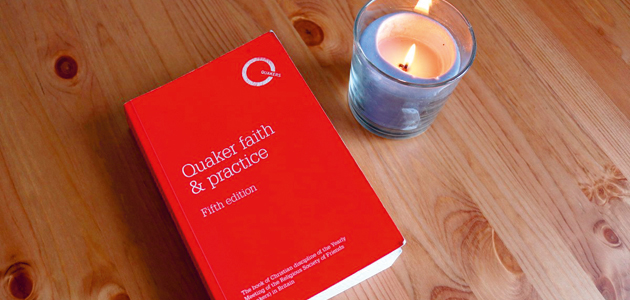
From a local library, I read about 30 faith-based books before I came across Quaker Faith & Practice. When I read the introduction and the first chapter, Advice & Queries, a tingle of excitement ran down my spine. I carried on reading and when I got to the page 'Ways of Seeking' I decided there and then I was going to be a Quaker.

A wooden table top with a book with a red cover and a lit candleWhat appealed to me the most is that the Quakers have no creed. There is nothing to say a Quaker must believe this or that. If you believe in God or not, it's your choice. Every Quaker must speak for themselves and seek their own spiritual path.

What binds Quakers together are the testimonies. These are most commonly referred to as SPICES:

  • Simplicity
  • Peace
  • Integretity
  • Community
  • Equality
  • Stewardship / Sustainability

Quakers live their everyday lives through these testimonies, interpreting them as they best see fit.

For me, it is the Equality testimony that I find most powerful. When the Quakers began in mid 17th century England, it was the Church that decided who should and shouldn't receive God's love. The Quakers rejected this and adopted the belief in Universal Love.
It may seem strange to think in this day and age, but at the time Universal Love was a highly controversial belief. This was because it took power away from the Church of England who claimed to have the authority, on behalf of God, to say who was and wasn’t worthy.
In essence, Universal Love means equality. You have an equal right to love and be loved in return no matter who you are. For me, I find an acceptance within the Quaker community that I've yet to experience elsewhere.

I'm now 43 and have been a Quaker for almost four years. My mental health has improved and I'm probably happier in my own skin than I have ever been. 

Saturday, 21 September 2019

World Gratitude Day

Today is World Gratitude Day.

Gratitude is something that has grown more within me since becoming ill. The small things have become the big things. A cup of coffee, a shower, sitting outside in the sunshine or a visit/message or letter from a friend. These things matter more to me now and I am more thankful for and actually often enjoy more than the big things at times.

I think we need more gratitude in our lives and to take a step back and evaluate our lives and what we feel gratitude for and what matters the most to us and makes us the happiest and to help out other people and share kindness and happiness.


Image result for world gratitude day

Sunday, 15 September 2019

Guest post by Michelle on living with Trigminal Neuralgia - Pain Awareness Month 2019

A caucasian woman with brown hair and purple hair wearing a  cream jumper
It's Tuesday morning, about 11am. For the third time since 7am, the ache pulsing through the right-hand side of my face has turned into indescribable bolts of agony. Some describe it as electric shocks, but today it feels like someone has flipped an "on" switch, activating searing acid trying to destroy my face from the inside out. My teeth and gums are indistinguishable from my jaw and cheekbone. They're one amalgamated plate of pain. I sit on the floor and grip the hair on the other side of my face, incapable of doing anything except scrunching my eyes and whimpering "ow, ow, ow." One of my dogs tries to comfort me by licking the only exposed skin area he can find: that searing side of my face. It's my breaking point. I call my doctor's surgery to tell them I need an urgent telephone appointment. I'm giving in, relinquishing my quality of life to the side effects of the medication that will help.

To some extent, knowing what's happening to me helps. If you put your palm on your ear and splay your fingers out- pinky under the lip, middle finger towards the nose, thumb above the eyebrow-you've got a rough idea of the three nerve branches in your face. Each branch has a few coming off of it, but that three-pronged nerve is where the "trigeminal" in "Trigeminal Neuralgia" comes from. The "neuralgia" is nerve pain. Often, in TN, there's an impingement on that nerve. It can cause misfiring on one, two, or even all three branches. For those whose MRI shows a reason for their pain, a surgery the decompress the nerve puts you out of action for about two weeks, but in return they're likely to have years free of torturous pain. This is more common in TN type 1, which is usually flashes of pain. In type 2 typically has longer periods of pain, more of a "strong, consistently throbbing face ache." This usually doesn't have an obvious cause that can be surgically rectified. People can have both, and often distinguishing between them isn't quite straightforward.

TN used to be referred to as "the suicide disease" because of the intense pain. It is debilitating and exhausting. Those who have been through kidney stones and pregnancy as well as TN agree that TN is by far worse, and harder to treat. Before vaguely effectivetreatments existed, many resorted to suicide. When my flare ups were only occasional, I didn't understand. When I became paralysed by pain repeatedly in the day, I understood. Cold wind on my face was a trigger. So was eating on that side of my mouth, brushing my teeth, blowing my nose, and a plethora of other benign things.

But I'm lucky. My dentist recognised the symptoms and didn't recommend pulling any seemingly healthy teeth to try to resolve the issue. Many others have had multiple teeth removed. Nor have I had to argue with my GP about my symptoms being psychosomatic or a migraine. Neurology advised on medication to start prior to my referral. Others waited months for even this. I'm hoping that an obvious physical cause will be found so I can have a long-term intervention instead of dulled pain, nausea, and thrice daily naps courtesy of my current medication.

Monday, 9 September 2019

Pacing, Activity Management and Rest - a toolkit

What is Pacing?

Pacing can be used by anyone living with a chronic illness/disability.

Pacing is helping you to keep a healthy balance between activity and rest by spacing out activities during the day. It enables us to take better control of our health and stay with our body's limits, even when we are unwell, and become experts in managing our health and life better and prevent exacerbating symptoms, or even causing a crash or relapse.

Though learning how to pace ourselves in can bring improvements in the way we feel and whilst it does take a lot of patience and self-control to learn how to do it in time most people are able to do more.

Learning how to pace ourselves allows us to gain a better awareness of our own limitations which allows us to better manage our energy levels and maximise what we are able to to on a daily basis.

It does take a bit of practise and work (and I'm still learning and improving myself) but once you've mastered it it will significantly help you manage your health.

The Traffic Light System

Traffic light 'to do' list from
© Stickman Communications
With he traffic light system it gives you a visual way of balancing activities to help you maintain your energy levels. and plan your day (for planning see below).

Green are easy tasks/activities
Orange are okay tasks/activities
Red are challenging tasks/activities

So with the traffic light system if you were to do a red task on your 'to do' you know to follow it by a green task or a period of rest so as to avoid overdoing yourself and making your symptoms worse allowing you carry on throughout day.

What is so good about the traffic light system is that you can adjust it for how you are feeling that day. So on a good day making a telephone call may be a green task, but one another day where you're running low of energy or you're feeling anxious making a telephone call may be an orange task.

What you label as red, orange and green is individual to you. 

Alternatively you could label green could also be labelled as rest, orange for low energy activities and red for high energy activities.

On bad days is is best to do more green and orange activities and if possible avoid red activities.

(Pacing Sticky Notes from © Stickman Communications) 


20:10

20:10 is another easy way to get a balance of activity and rest in your day. It basically entails 20 minutes of activities followed by 10 minutes of rest. On a bad day you could swap this around and do 20 minutes of rest and 10 minutes of activity or whatever is manageable for you. 


What is 'Activity'?

An activity is anything that uses up our energy, it may be physical, cognitive or emotional energy; basically nothing that is not complete rest. This could be anything from baking a cake, laying down listening to an audiobook and even getting upset or being in pain.

Using a balanced and steady approach towards activities prevents the tendency to overdo things which leads to an inevitable crash, relapse or exacerbation in symptoms.

Planning


Planning your day out is also a really important so you can spread out and use your energy wisely. You can use analogies such as 'Spoon Theory' to help you plan out your day and where to spend your energy of 'spoons'.

When planning what actives that you will do that day think it's important to categorise activities such as: physical, cognitive, high energy and low energy. This is where the traffic light system can be useful.

On bad days you should aim to do more green and orange activities.

I find using my pacing whiteboard and post-in notes really helpful to plan my day out, and if I do find myself running out of energy I can always rearrange the magnets to something that will be more manageable for the rest of the day. It's also a great visual tool, especially to colour coding (and I couldn't resist buying coloured whiteboard pens too!).

My whiteboard plan for the day using the Traffic Light system

Set yourself some reasonable and manageable goals for the day, like getting dressed, washing your face and spending some time out in the garden. Whatever is manageable for you to do on that given day. 

Remember, it's okay to have bad days and it's okay to do little on those bad days.

Find your baseline and stick to it, if 15 minutes of studying is manageable then just study for 15 minutes then take a break. Look after yourself as a car can't drive without fuel. Don't push yourself beyond your threshold, especially to please others, prioritise your limits, yourself and your health. And if that means cancelling plans then that's okay. 

(Pacing Fridge Magnet Set from © Stickman Communications)

Activity Management

This is slightly different to pacing but the idea behind it is very similar.
"Activity Management is an approach that combines pacing (which is to stabilise your ability level and grading (which is used to build up your ability level). - Severe ME/CFS: A Guide To Living by Emily Collingridge
To manage activities effectivity you need to listen to your body and work out how long you are able to do an activity for - this is your baseline. Your baseline is the amount of one activity you can do consistently without your health worsening. When you know your baseline you can know better your limits for good and bad days.

Everyone's baseline is different and how long one person can do a particular activity for differs for someone else.

When working out your baseline it's important not to make your symptoms worse. It may be help to keep a diary of your activities each day and note how long you was able to do that activity for to help you work out what your average baseline is. When taking your notes also make a note of your emotions as that can affect or energy levels as well as other notes such as your level of pain that day and breaking activities down with periods of rest. Slowly you will grade yourself up to increase the time you spend on an activity. When you listen to your body and let it guide you as to what activities you are able to do when; when you feel able to do something or not do something

And remember, it's okay to ask for help.

Switching

Switching is an important aspect of activity management. Often when you have a chronic illness/disability focussing on the same activity repeatedly during the day can exacerbate and make symptoms worse.

By doing different activities during the day can mean you are able to do more.


So switching could involve watching TV followed by making and eating lunch followed by doing your physiotherapy exercise followed by sitting in the garden with a hot drink. Doing this means you are doing a variety of different types of activity - cognitive, physical, high and low energy. Also, don't forget to plan in rest periods too.


Prioritising 

Try to prioritise the most important tasks and remember that there is always tomorrow. I find writing colour coded lists helps or using my reminders app which sync across my mobile, laptop and iPad helpful. You could carry a little list book or diary around with you or get a pack of differently coloured post-it notes.

When writing your 'to do' list or plan for the day make not of what actions have the most urgency, such as ordering medication you're running out of. It might help to number your list from 1 being to most important so you know that action needs to upmost attention so you can get them done first before your batteries start to run low.

If you're going through a rough time with your health and you have a lot of appointments it might also help to prioritise your appointments (this is something I've been doing lately). Look at what appointments you have, what appoints are important or can't be changed and what appoints can be postponed to a later date  so as to give you more time to rest and recuperate.

What exactly is rest?

Often we think that resting is laid watching TV or listening to music, and even though we are physically resting we are still actually stimulating our minds by using up cognitive energy - such as having to concentrate on the story line and listen to what is being said.

Complete rest means having no stimulus around us ignorer for our brains to rest. No sound, light, smells etc. To help you have complete rest you can put on an eye mask and use ear plugs or noise cancelling headphones/ear defenders. Whist resting you may try out breathing exercises, meditation or other things like visualisation. This type of 'neurological rest' allows or bodies and minds to recharge better.

When you have a chronic illness/disability, especially if you struggle with chronic fatigue having regular periods of rest or relaxation during the day is important when it comes to pacing.

Remember: never feel guilty for resting.


To sleep or not to sleep?

Some healthcare professionals say the having a sleep during the day can help to get better sleep as bedtime as this prevents getting over tired at bedtime resulting in difficulties getting off to sleep.

Some experts say they you should not sleep after 3pm.

Other professionals contridict this and say it is not necessary to sleep during the day and daytime sleeping can affect sleep quality at night.

I think its about really listening to your body. If it get to after lunch and your body just can't function without a nap then have a nap and then you can gradually build yourself up from sleeping during the day to just having a period of complete rest.

(Since reading about this doing this post I've been having a rest/nap in the afternoon and I have found benefit from this.)

Links and References

Saturday, 7 September 2019

Migraine Essentials - UK Migraine Awareness Week 2019

I've written about migraines before but that was more of an info/awareness post so because of my frequent migraines I thought I'd write a list of some of my personal migraines essentials which you might find helpful.

Everyone's unique and have their own personal essentials and tips and tricks but here are a few of mine...
  1. Dimmable lights 
  2. Cooling forehead pad/cold wet flannel or forehead roll-ons
  3. Eye masks - I either use a cotton or I have another which has a gel insert which I can pop in the fridge
  4. Comfortable noise cancelling headphones or ear defenders/ear plugs
  5. Whatever medication you need and take for your migraines and for pain relief and anti-sickness
  6. Big tumbler of water/juice to keep your fluid intake up and with ice cubes in
  7. Plenty of cushions and pillows to get you into a comfortable and supportive position
  8. Pjs, (because they're more comfortable and lighter to wear)
  9. Just-in-case sick bag/bowl 
  10. Having your phone nearby
  11. Communication cards - I get mine from © Stickman Communications 
  12. Cooling air fan
  13. Something easy to do which can help distract you like listening to a podcast or audiobook on the lowest volume.
  14. Rehydration solution
  15. Snacks as I find this easier than big meals, cold things like ice lollies or sorbet are especially nice
Purple background with purple text saying 'Migraine Essentials' and a collage of different items from the list including a lady with a flannel on her forehead, a drink tumbler, headphones, an ice lolly, and iPod, an air fan, a gel insert eye mask, pyjamas and a man reaching for a mobile phone next to his bed

Monday, 2 September 2019

Migraine Awareness Week 2019

It's currently Migraine Awareness Week in the UK. Today 190,000 people in the U will have had a migraine - myself included.

Migraines are something I battle with a lot! I have Chronic Daily Headaches/Chronic Migraines as well as Migraines with an Aura and the rarer Hemiplegic Migraines.

At the moment I've had an ongoing migraine for almost two weeks now and it's no fun at all. 
For me migraines are just part of my life and I have learnt to live with them. Somedays I can about function near enough normally whilst having a migraine which can be quite deceptive, like Have a migraine now but I'm able to blog now (just in a dimmed room with a dimmed screen and tinted lenses). Other days I feel incredibly ill and like my head is being crushed and I can barely talk or function. 
They are not something I would wish upon anyone. 
With bad migraine days even simple tasks can be painful and difficult. 

When I have a migraine I have to take lots of different medications to try to relieve my migraine: Sumatriptan (triptans are migraine prevention medications), pain relief medications and antiemetic (anti sickness) medication. Unfortunately theses things don't completely stop or cure my migraines, they just give me a little relief.

One day I hope a cure for migraines can be found, but so far there is only prevention and management of migraines. So for the meantime people like me must just try our best to cope as best we can.

What is a Migraine?

A migraine is much more than 'just a bad headache'. They are a complex neurological condition which come with a wide variety of symptoms. There are also many different types of migraines and there's no such thing as a 'typical migraine', so what a person experiences or is a migraine trigger will be completely different for another person, even if they are experiencing the same type of migraine - confusing or what?!

The cause of migraines are unknown but it is believed that migraines have an underlying genetic factor and women are more affected than men.

In the UK migraines affect around 9 million people, they affect some people more often than others. Some people may just have a few migraines in their lifetime, but other people like myself it's not uncommon to have several migraine attacks a week.

When a person is experiencing a migraine it is referred to as a 'Migraine Attack'. Migraines can last from anything from a few hours to a few days.
The term 'Chronic Migraines refers to when a person has 15 or more migraine attacks a month.

Migraine Symptoms and Stages

These vary depending on the type of migraine but some common migraine symptoms include:

A migraine can present as a painful headache alongside other symptoms including
  • Pain in the head
  • Visual disturbances
  • Sensitivity to sound, light and smalls
  • Nausea and vomiting 
  • Fatigue/lethargy 
It's had to predict a lot of the time when a migraine will hit. However migraines follow a sort-of set of stages:

1. Prodrome or pre-warning stage.

In around 60% of people with migraines they will have a pre-warning stage. This stage is difficult to work out as to whether you're going to have a migraine or if your just feeling unwell. Symptoms may include mood swings, fatigue, muscle stiffness and hypersensitivity. 
For me I get quite confused, irritable and difficulty concentrating, I get spinal/neck pain (that spot where your spine meets your head like I have now), throbbing temples, hypersensitivity and visual disturbances.

2. Aura

This stage doesn't happen in people who have Migraines without and Aura.

This stage includes a wide variety of neurological symptoms. This stage usually lasts from 5 minutes to an hour. They usual happen before the migraine but for some the storms can last during the migraine too.
For me especially the visual changes an speech problems last longer for me.

It is caused by changes the cortex are of the brain. 

Some people may experience visual disturbances.
Other visual disturbances may include seeing dark or coloured spots, stars or zig-zag lines. There may also be numbness or pins-and-needles, muscle weakness, dizziness. A person's speech and hearing can also be affected. Memory changes can also happen, such as feeing dread, confused.

For it's like I'm seeing the Northern Lights in front of me, I can slur, forget or stumble on words and sounds gets muffled or I get a dull ringing in my ears. I also get a feeling of dread and confused.

I also have a rare type of migraine called Hemiplegic Migraines where I get numbness/weakness, pins-and-needles and speech loss and down one side of my body (symptoms very similar to a stroke) but thankfully these systems ease of after a while.

3. The headache or 'main attack'

This part is 'the headache' which can involve different types of head pain typically throbbing and made worse my moving your head. The pain can also feel like a pressure in your head like a crushing sensation.
Pain can be from moderate to severe to unbearable (the the point you which you didn't have a head!)
The pain is usually on one side of the head, button always.
The pain builds up gradually and is made worse by physical activity. So this is the time to stop, lay down and rest.

As well as the pain other syomtoms may include hypersensitivity, fatigue, dizziness/diorientation and mood changes.

In my aura stage I also get nauseous but when I have the headache the nausea worsens sometimes to the post I'm actually vomiting, probably due to the pain. My hypersensitivity can also worsen.

This stage can last from a few hours to several day, sometime longer for some people.

Resolution

Most migraines slowly fade away, bu in some cases they may suddenly stop after a person is sick or cries a lot. Sleep may help a lot of people and can help the person to overcome their migraine.

4. Postdrome or recovery

This is a big like a 'migraine hangover' once to he ache has settled which can make hours or days to overcome. Symptoms can be similar to the first prodrome stage.

Types of migraines

  • Migraine without an aura - this is the most common type of migraine affecting around 70-90% of migraine suffers
  • Migraine with an aura - a common type of migraine with additional neurological symptoms 
  • Chronic migraines - this is the name given the you have 15 or more migraines a month and recently defined sub-type of Chronic Daily Headache This affects less than 1% of people so yay me, not!
  • Menstrual migraines
  • Hemiplegic migraines a rare type of migraine (year me again!) which have symptoms that resemble a stroke, but the symptoms are temporary
  • Migraine with brainstem aura, another rare type of migraine, formally known as basilar-type migraine

References and Links


Sunday, 1 September 2019

World Letter Writing Day 2019

Today is World Letter Writing Day so I thought it would be great opportunity to share with you one of my favourite hobbies which I've been wanting to do for a while.

Letter writing or 'snail mail' gives me the social interaction I struggle to do in person because of my health and it enables me to keep in touch with people I know who I know but don't live nearby. Sending a letter is also so much more fun and prettier than sending a text or an email. 

I love creating each letter unique and making things to put into letter like word searches, quote cards and drawings. I like making cards too. I also put in little extra like stickers, washi tape samples and. I also put in things like mini playlists and a small list of questions as a way of getting to know my pen pals better. Sometimes I put in things like tea or coffee sachets too. 

It's also a really nice distraction activity.

Sometimes it's not always possible for my to handwrite letters so I type them - I'd LOVE to own a typewriter. Every birthday and Christmas it's on my list so hopefully one day I'll persuade my Dad. Or I may just go out and by one and he'll have to deal with it!

Because of my health, like the relapse I'm going through at the moment I can be slow in replying to letters, but all my pen pals are understanding that there may be delays, or all I'm able to send is a postcard.

Some of my pen pals also have health problems themselves so we have a shared understanding of this and we can talk about it, but it's not all we write aboutas there's more to us than our disabilities  Instead we write about what we've been making if we both like crafts, or what we've been watching on TV or the funny things our pets have been up to.

I started up a pen pals group on Facebook for people with chronic illnesses/disabilities called 'Chronic Pen Pals'.

I'm always looking for new ideas to make my letters and envelopes more interesting, pretty and creative. Pinterest and snail mail accounts on Instagram are good places for inspiration. 

In my bedroom I have a giant noticeboard (see picture below) where I put my mail up on and I have some fantastic push pins - little ducks, turtles, ladybirds, copper stars, gold roses, wooden shapes, sparkly ones, different coloured gems and Mick Mouse push pins. When we moved to this house I asked my Dad if I could get a notice board but he didn't realise how big a one I was getting so he got a bit of a surprise when he came home fro work to find it parcelled up in the hallway! But now Dad can see why I need such a big notice board.

Over the years I've been writing I've become good friends with some of my pen pals. Some of the people I write to we don't regularly exchange mail. For me I might just send a 'hello; I'm thinking of you' card in the mail to someone as I'd rather send mail than drop the person a text/online message.

As well as letter writing I also do something called PostCrossing which is where you send off a postcard to a random member and in return you get a postcard back from another random member. I love being all the different international stamps. My favourite stamps have to be the Moomin stamps and the scratch-and-sniff stamps from the USA where interesting too. It's a fun and interesting hobby, it's also expensive but I can think of worse things to spend your money on.

My local village Post Office and Postman always recognise my mail and they like being something pretty as opposed to the usual boring plain white or brown envelopes.

Letter writing is such a wonderful hobby and it's something I'd recommend to anyone. You don't need anything fancy or expensive, it more the words and the person that it's from that counts.


My notice board

Saturday, 24 August 2019

Tips for staying cool this summer

As we're set to have another heatwave here are some tips on coping with the heat.
  1. Drink more fluids than normal
  2. Put ice into your drinks
  3. Keep a bottle of water/juice in the fridge or freezer
  4. Keep sunny windows closed during the day, and open windows at night when the temperature has dropped
  5. Keep blinds/curtains closed or partially closed
  6. Avoid staying outside during peak times (11am - 3pm)
  7. Check what medications you are taking as some can increase your sensitivity to sunlight. If you're unsure call your pharmacy.
  8. Wear light and loose fitting clothes
  9. Wear a hat when outdoors and apply high SPF sun cream and reapply this every 60-90 minutes
  10. Wear UV sunglasses, if you wear prescription sunglasses get a UV filters made on them
  11. Put a bowel of ice in front of an desktop air fan
  12. Wet a funnel for your forehead or towel and put it around your necka
  13. Have cooler showers/baths
  14. Spend your day in cooler rooms, especially for sleeping/napping
  15. Make you own lollies. You can cheaply buy lolly moulds and fill them with things like fresh fruit juice, smoothies or dilute juice.

Friday, 23 August 2019

How to make your blog and social media as accessible as possible

Accessibility on my blog has always been on my mind, trying to think about accessible aesthetics; making my blog look nice but having a good enough contrast between the text and the background and have easy read fonts. Early on in my blog I also installed a plug-in widget which I'll mention more about below. This also comes from needing to use accessible features myself. I use things like magnification, large cursors, text readout and bigger legible fonts, but I didn't want to make the font huge as I knew this wouldn't appeal to all readers, plus it would lead to a lot of scrolling which is why the plug-in widget is perfect. On my blog the font is fine, but users who do struggle with the vision can have the option of either use their own software or the plug-in widget.

I'm now becoming even more acutely aware of accessibility so I've been looking at moving forwards and improving on accessibility.

So, how can you make your blog and social media more accessible?


Font Size and Colour

Use a clear legible font such as ariel, comic sans, helvetica, verdana or something similar.
Don't make your font size too small.
Have a good clear contrast between your background colour and text colour. Dark fonts against light backgrounds work best.

Plug-in Accessibility Widgets

Add a plug-in accessibility widget. You can find ones for free such as User Way which is super easy to set up and install on your blog via a html code. These plug-in widgets offer features such as the ability to enlarge text, change the contrast, have a reading bar, read the page, highlight links and more.

Headings and Subheadings

Use headings. This helps people to navigate your website more easily and skip through to the parts they wish to read. It also makes your posts more organised.


Hyperlinks

Make hyperlinks clear. Rather than just typing "click here" type for example "check out my page on..." You can also make hyperlinks clearer by having them in a different colour to the main body of text. Plug-in accessibility widgets can also highlight links making them clearer to viewers.

Labelling Links and Buttons

By labelling links and buttons it makes it easier for those using screen reading software or magnification. By doing this readers don't have to press a button without knowing what it is, especially if is a link to another website.

Adding Closed Captions (CC) or Subtitles

Adding CC/subtiles to your videos will greatly increase your viewing numbers. Many people use CC/subtiles who aren't D/deaf or hard of hearing - I'm not but I often use subtitles as I find it helps me understand what I'm watching especially if I'm feeling brain fogged.
When adding CC/subtitles use clear, easy to read simple fonts on an accessible background such as black text on a white or yellow background.
Apps such as Apple Clips (free), Clipomatic (£4.99) and CutStory (unlock record for £1.99) which allows you to make videos which autogenerate subtitles to share on social media such as Instagram stories.
On YouTube you can also add CC/subtitles which also are autogenerated and adding CC to the video title will invite more viewers as the auto subtitles aren't always correct an you can get some odd sentences.
From experience I would say that on YouTube an apps hat autogenerate subtitles to double check and edit the the subtitles to ensure what is being spoken is correct in the subtitles. It also benefits viewers if you add CC which give extra information such as [♫] to indicate to the reader that music playing or you could write [acoustic music] or [background chatter]

Transcripts

If you can't get CC/subtitles an alternative to this is to write a transcript of the video. If you have an audio feature make a transcript and this allows D/deaf and hear of hearing readers of your blog to read what is being said. If their are sound affects add these too, such as [♫] to indicate to the reader that music playing or you could write [acoustic music] or [background chatter].

Audio

If you do want to go the extra mile in terms of accessibility as well as the text of you blog you could if you wish make a recording of what is written to give readers the option of reading or listening to your blog post. 
(This is something I am considering doing as I know which my dyslexia and brain fog mix I'd find listening to a blog post easier than reading but I'd need more energy and work out the logistics first.)
As an alternative to alt text/image descriptions you could make an audio description of the image.

Videos and Audio

Avoid using video and audio that starts automatically. This makes it easier to navigate your blog better. It also makes it more accessible for those who use screen reading software as they have to listen to their screen reader and the audio at the same time.

Alt Text (Alternative Text) and Image Descriptions

Alt text gives a audio description of images to those who use screen reading software.
To make your social media really accessible take a few moments to write alt text. Often, such as on Facebook the automatic alt text that is generated is very poor so you're best editing it yourself.
On your blog you can write an image description such as in the image's caption.
An example of alt text/image description could be:
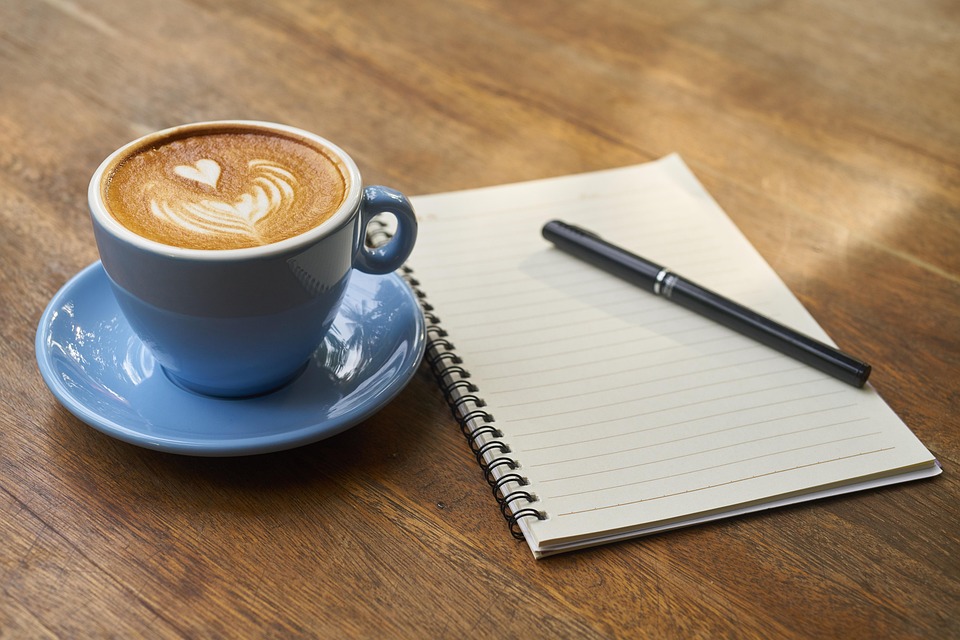
Image result for coffee with notebook
Example: A wooden worktop with a blue cup and saucer
of coffee next to a notebook and pen.
or...

Image description

A wooden worktop with a blue cup and saucer of coffee next to a notebook and pen.

Summary and Thanks

I hope these tips have helped give you insight and they will help you to make you blog or social media account more accessible, or just make you more aware off different accessibility needs.

Thank you to Holly at www.lifeofablindgirl.com and Deafie Blogger www.deafieblogger.com

Tuesday, 20 August 2019

The Plasic Straw Ban with Jessica Kellgren-Fozard


Jessica Kellgren-Fozard​ just sums up the plastic straw ban perfectly in how is affects some disabled people including myself. I couldn't make a better video if I tried.

As an essential plastic straw user who has seizures, involuntary movements, allergies, weak wrists or having to wear splints and PoTS (resulting in needing to lay down and drink a lot) along with a bunch of other stuff, straws allow me to keep hydrated with ease.

Jessica speaking out on this issue is so important to me. Like Jessica I've received a lot of negativity taking about the straw ban and how it affects me, or receiving comments like "I'm disabled and I don't need straws" or the many suggestions telling me about x,y,z, alternatives which don't work for me and then getting tired and bored repeating myself and having to explain why x,y,z, aren't suitable. 

What I found so odd is recently I went to a well known coffee shop (I won't name who) but I put a fruit pot which was in a plastic tub and I got a plastic fort to eat with and my coffee came with a plastic lid, yet... I got a paper straw! Where is the sense in that. Oh and my straw fell to pieces in my drink, yuck! Plus there was no recycling bin in sight for all my plastic.

Thank you so so much Jessica!

(Oh and thank you Jessica for reminding me to change the straw I keep in my bag!)

PS: I do reuse my plastic straws until they are no longer usable and when I do I cut them horizontally and into little pieces.

Monday, 19 August 2019

World Photography Day 2019

Today is World Photography Day. They can be artistic or capture moments in time. They can show aspects of who we are and they can be a form of communication and we live in a world of imagery in an online age.

Here is a collage of photographs I've taken over time...


Image description (starting from the left corner going down in columns)
  1. A photograph of myself with brown hair, glasses and a colourful woollen scarf
  2. A red postbox with mail being held ready to be posted
  3. A bottle of Diet Coke with the name 'Naomi' in red letters on the bottle
  4. Two postcards, a pen, scissors and colourful tape
  5. An entrance ticket with yellow flowers and in white text is reads 'Royal Botanical Garden, Kew' 
  6. On a wooden floor a pair of pink satin ballet pointe shoes
  7. A bright purple cornflower
  8. A white, brown and tan guinea pig looking up at the camera
  9. A green succulant plant inside a hedgehog shaped plant pot
  10. A brown donkey with a white muzzle
  11. A photograph of me an my dad. I have read hair and dark glasses, my Dad is wearing a striped top, sunglasses and a navy baseball cap
  12. My giant notice board filled with a collection of different items. Around the notice board are coloured lights.
  13. A tan and black small dog nestled in a duvet
  14. The Hogwarts Express train which is a scarlet red and black steam engine. Leaning on the train is my Dad in a red jumper and jeans.
  15. A zen garden with sand and green plants.